A study room isn’t just a desk in a corner. If you work from home, take online classes, or need a place to actually concentrate, your environment either helps your brain focus or fights it every minute.

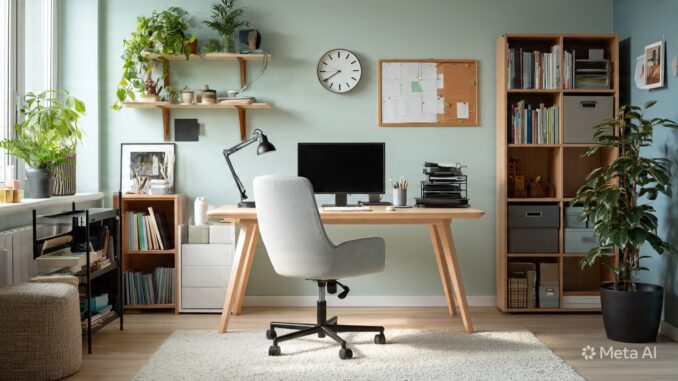
Distraction is the enemy of deep work. Visual clutter, bad lighting, uncomfortable seating, and noise all chip away at your attention. The best study rooms are designed like a cockpit: everything you need within reach, nothing you don’t need in sight, and sensory inputs tuned for focus.

These 26 ideas use psychology, ergonomics, and design to help you get in the zone and stay there. Whether you have a whole room or just a nook, you can build a space that makes focus easier.

The Focus Formula: Light + Ergonomics + Calm + Control

Research shows 4 things impact focus most: natural light, ergonomic setup, low visual noise, and control over your environment. Every idea here targets at least one.

Location & Layout: Set Yourself Up to Win

1. Face Your Desk Toward the Door, Not a Wall
The look: Desk positioned so you see the door when seated, ideally with a wall behind you.
Why it works: Evolutionary psychology calls this “command position.” You’re less anxious when you can see who’s coming. Staring at a wall all day feels like punishment.
Get the look: If you must face a wall, put inspiring art or a window view in your line of sight. Never put your back to the door if you can help it.

2. Put Your Desk Near Natural Light, But Not In Glare
The look: Desk perpendicular to window. Natural light hits you from the side.
Why it works: Natural light regulates circadian rhythm and reduces eye strain. Direct glare on screens causes squinting and headaches. Side light is best.
Get the look: North-facing windows give consistent light without harsh sun. Use sheer curtains to diffuse if south/west facing.

3. Create a “Focus Zone” Even in a Bedroom
The look: Rug + paint color + lamp defining the study area. Back to the bed if possible.
Why it works: Context cues matter. Your brain associates bed with sleep. If you study where you sleep, neither works well.
Get the look: Use a room divider, bookcase, or even paint one wall a different color to mentally separate work from rest.

4. Keep Your Back to Clutter
The look: Desk faces out into room, with storage and clutter behind you.
Why it works: Out of sight, out of mind. Visual clutter in your peripheral vision drains focus even if you’re not looking at it.
Get the look: Put shelves and filing behind you. Keep your sightline clean — wall, window, or art only.

Desk & Ergonomics: Comfort = Focus

5. Get a Real Desk, Not a Dining Table
The look: 28–30” high desk, 24–30” deep, 48”+ wide.
Why it works: Proper depth means monitor is 20–28” from eyes. Proper height means elbows at 90°. Dining tables are often too high and too shallow.
Get the look: IKEA Linnmon + Alex drawers is the budget king. Sit-stand desk if you can swing it — changing posture boosts focus.

6. Buy the Best Chair You Can Afford
The look: Ergonomic chair with lumbar support, adjustable arms, and seat depth.
Why it works: Back pain is the #1 distraction. A $400 chair you use 8hrs/day is cheaper than chiropractor visits.
Get the look: Herman Miller, Steelcase used on Facebook Marketplace. If budget’s tight, add a lumbar pillow + footrest to any chair.

7. Monitor at Eye Level, Arms’ Length Away
The look: Top of screen at or just below eye level. Monitor 20–28” from face.
Why it works: Looking down causes neck strain. Too close causes eye strain. Both kill focus.
Get the look: Monitor arm or stack of books. Laptop users: external keyboard + monitor riser is non-negotiable.

8. Keyboard and Mouse at Elbow Height
The look: Elbows bent 90°, shoulders relaxed, wrists straight.
Why it works: Reaching up or down causes shoulder tension. Tension = distraction.
Get the look: Keyboard tray if desk is too high. Keep mouse close — no reaching.

Lighting: The #1 Focus Lever

9. Ditch the Overhead “Boob Light” During Work
The look: Overhead off. Use task lamp + ambient lamp instead.
Why it works: Harsh overhead creates glare on screens and shadows on paper. It’s fatiguing.
Get the look: 3-point lighting: task lamp for desk, floor lamp in corner for ambient, maybe LED strip behind monitor for bias lighting.

10. Use a 4000K–5000K Task Lamp
The look: Adjustable desk lamp with cool white bulb, 4000K–5000K.
Why it works: Cool light = alertness. It mimics daylight and suppresses melatonin. Save warm 2700K for evening wind-down.
Get the look: BenQ or Lumina lamps are gold standard. Budget: IKEA Forså + Philips Daylight bulb. Position lamp opposite your writing hand to avoid shadows.

11. Add Bias Lighting Behind Monitor
The look: LED strip on back of monitor casting glow on wall. 6500K.
Why it works: Reduces eye strain by lowering contrast between bright screen and dark room. Gamers know this trick.
Get the look: $15 USB LED strip. Set to white, not colors. Dim to 10–20% brightness.

12. Maximize Daylight, Then Supplement
The look: Sheer curtains, not blackout, during work hours.
Why it works: Daylight improves mood and focus. But glare is bad, so diffuse it.
Get the look: Top-down bottom-up shades give light + privacy. Work near window 9–3pm if possible.

Color & Visual Calm

13. Paint Walls Blue, Green, or Warm White
The look: Muted sage, soft blue, or warm greige walls.
Why it works: Blue and green are proven to enhance focus and calm. Red and orange are stimulating — bad for deep work. Stark white can feel sterile.
Get the look: Benjamin Moore “Palladian Blue,” “Healing Aloe,” or “Classic Gray.” Keep it desaturated, not bright.

14. Reduce Visual Clutter to Near-Zero
The look: Clear desk except: computer, lamp, notebook, pen, water. That’s it.
Why it works: Every object in view is a decision your brain makes. Clear space = clear mind.
Get the look: Use “one touch” rule. When done with something, put it away immediately. Closed storage beats open shelves.

15. Use Closed Storage, Not Open Shelves
The look: Cabinets, drawers, or boxes vs open bookcases full of stuff.
Why it works: Open shelves are visual noise. Your eye catches every spine and object. Closed = calm.
Get the look: If you love books, face them backward or use doors. Only display 3–5 beautiful objects.

16. One Inspiring Art Piece, Not Gallery Wall
The look: Single large landscape, abstract, or quote above desk.
Why it works: Gallery walls are stimulating. One focal point gives eyes a place to rest during breaks.
Get the look: Nature scenes reduce stress. Avoid busy patterns or faces that feel like someone’s watching.

Sound & Scent: Control Your Inputs

17. Add White Noise or Brown Noise
The look: Small white noise machine or fan on low.
Why it works: Masks distracting sounds — traffic, neighbors, HVAC. Consistent sound helps ADHD brains focus.
Get the look: Brown noise is deeper than white noise. Try an app first. Headphones work but over-ear is better than earbuds for long sessions.

18. Use Scent for State Change
The look: Essential oil diffuser with rosemary, peppermint, or lemon during work.
Why it works: Smell triggers brain states. Rosemary improves memory. Peppermint boosts alertness. Scent cues “it’s focus time.”
Get the look: Diffuse 15 min before you start. Turn off after. Don’t run all day or you get nose-blind.

19. Soft Surfaces to Absorb Sound
The look: Rug, curtains, upholstered chair, fabric pinboard.
Why it works: Hard surfaces echo. Echo = distraction. Soft surfaces make rooms quiet.
Get the look: Even a small rug under desk helps. Felt pinboard doubles as sound absorber + visual board.

Organization & Friction Removal

20. “One Touch” Paper System
The look: Inbox tray + file cabinet + trash. That’s it.
Why it works: Paper piles = decision fatigue. Touch it once: act, file, or trash.
Get the look: Vertical file holders beat horizontal stacks. Label files broadly: “Taxes,” “School,” “Receipts.”

21. Cable Management Is Not Optional
The look: No visible cords. Zip ties, cable tray, or raceway.
Why it works: Cords are visual chaos. They also collect dust and stress you out.
Get the look: Mount power strip under desk. Use J-channel to hide cables along leg. Label each cord.

22. Everything Has a Home Within Reach
The look: Pen cup, notebook, charger, headphones all within arm’s reach, no standing up.
Why it works: Every time you get up, you break focus. Returning to deep work takes 23 minutes on average.
Get the look: Desktop organizer or drawer insert. Do a “reach test” — if you have to stretch, it’s too far.

23. Use a Timer You Can See
The look: Physical Pomodoro timer or Time Timer on desk.
Why it works: Visible time reduces anxiety and keeps you on task. Phone timers = distraction portal.
Get the look: Work 25 min, break 5 min. Seeing time pass keeps you honest.

Nature & Movement

24. Add One Plant in Line of Sight
The look: Pothos, snake plant, or ZZ on desk or shelf you see while working.
Why it works: Studies show looking at plants restores attention. It’s a micro-break for your brain.
Get the look: If you kill plants, high-quality faux works visually. Real is better for air.

25. Make Space for Standing or Stretching
The look: 3x3ft clear floor space, or sit-stand desk.
Why it works: Moving every 30 min boosts blood flow and focus. Sitting all day = brain fog.
Get the look: Set a timer. Stand for calls. Do 10 squats. Under-desk treadmill if you’re hardcore.

26. Keep Water and Healthy Snacks Visible
The look: Large water bottle + nuts or fruit on desk.
Why it works: Dehydration = 2% drop in focus. Hunger = distraction. If it’s visible, you’ll use it.
Get the look: 32oz bottle so you don’t refill constantly. No sugary snacks — crash later.

What to Remove From Your Study Space Today
-
Phone: Put in another room or drawer. Notifications destroy deep work.
-
TV: If you can see it, you’ll use it. Cover it or move it.
-
Laundry piles: They scream “unfinished tasks.” Visual stress.
-
Multi-colored sticky notes everywhere: One task list only. Rest goes in a notebook.
-
Anything that beeps: Printer, notifications, smart speaker. Turn off.
The Focus Test

Ask of your study room:
-
Can I work 90 minutes without getting up?
-
Is my eye drawn to clutter or to my work?
-
Does the light give me energy or make me sleepy?
-
When I sit down, do I feel calm or overwhelmed?
If it fails, adjust. Your environment is either working for you or against you. There’s no neutral.

The Formula
-
Light: Side natural light + 4000K task lamp + bias lighting.
-
Ergonomics: Monitor at eye level, chair with support, keyboard at elbow height.
-
Calm: Warm neutral colors, closed storage, clear desk, one art piece.
-
Control: Door you can close, noise you can mask, temp you can set.
You can’t force focus. But you can design a room that removes every excuse not to focus. Start with light and your chair. The brain follows the body. If your body is comfortable and your eyes aren’t straining, your mind has a fighting chance.

Build the cockpit. Then do the work.
Leave a Reply