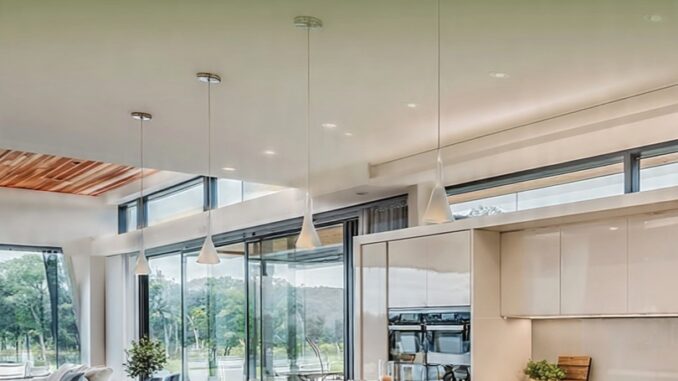
How to make your kitchen, living, and dining areas flow — without the noise, mess, and lack of definition

Open-concept is still the most requested layout for new builds and remodels. But “open” doesn’t have to mean “one big echoey room where everyone sees your dirty pans.” Contemporary open-concept done right uses zoning, materials, and smart planning to feel connected and intentional.

Here are 28 design ideas that keep the flow while adding function, style, and just enough separation for real life.

The 4 Non-Negotiables of Good Open-Concept

Before the ideas, nail these or the space won’t work:
-
Zoning: Use flooring, lighting, ceiling changes, or rugs to define “kitchen” vs. “living” without walls. -
Ventilation: You can’t hide cooking smells. A powerful, quiet range hood is mandatory — 600+ CFM, ducted outside. -
Acoustics: Hard surfaces echo. Add rugs, upholstery, wood, and fabric to absorb sound. -
Visual control: From the sofa, you shouldn’t see inside your dishwasher. Plan sightlines.
Now, the designs.

Layout & Structural Ideas That Define Space

1. The “Broken-Plan” Peninsula

What it is: Instead of a full wall, use a 42"H peninsula to separate kitchen from living. It blocks sightlines to the sink but keeps conversation open.
Why it works: You get partial privacy for mess, plus a breakfast bar on the living side.
Contemporary twist: Waterfall quartz on the end, no upper cabinets above.

2. Double Island Layout

What it is: One island for cooking/prep with sink + cooktop. A second parallel island for seating, serving, and storage.
Why it works: Separates dirty work from clean zone. The second island faces the living area so the cook faces guests.
Need: 12+ ft of width. Each aisle needs 42-48" clearance.

3. Sunken or Raised Kitchen Zone

What it is: Drop the kitchen 6" or raise it 1 step. You keep it open but create a clear boundary.
Why it works: Psychologically defines space without walls. Great for lofts and modern homes.
Code check: Steps need to meet code for rise/run and railings.

4. Full-Height Slat Wall Divider

What it is: Vertical wood or metal slats, floor-to-ceiling, 2-4" apart. Separates spaces but lets light and air through.
Why it works: Adds architecture and mid-century warmth. You can see through it, but it breaks up the “bowling alley” effect.
Material: White oak for warmth, black metal for industrial.

5. Kitchen Inside a “Box”

What it is: Use a different ceiling treatment, floor material, or color to box out the kitchen zone. Example: wood ceiling over kitchen only, while living stays drywall.
Why it works: The eye reads it as a room, even with no walls. It’s subtle but effective.

6. Galley Kitchen with One Open Side

What it is: Classic galley, but instead of a wall on the second side, it opens to dining/living.
Why it works: Ultra-efficient for cooking, but the open side keeps it social. Add a 12" counter overhang for stools.
Best for: Narrow homes and condos.

7. L-Shape + Large Island

What it is: L-shaped perimeter with a 9-12 ft island facing the living area.
Why it works: The most flexible open-concept layout. The L hides mess. The island is command central.
Rule: Keep the fridge, sink, and stove on the L so the island stays clear for serving.

Visual Zoning with Materials & Color

8. Change Flooring at the Kitchen Edge

What it is: Wood in living/dining, large-format tile or concrete in kitchen.
Why it works: Your feet know when you’ve left one zone and entered another. No walls needed.
Transition tip: Use a flush Schluter strip. No chunky thresholds.

9. Monochrome Kitchen, Contrasting Living Room

What it is: All-white or all-gray kitchen. Living room gets color, wood, and texture.
Why it works: The kitchen recedes visually so the living area is the star. The whole space feels calmer.
Contemporary key: Keep the kitchen matte, not glossy, so it doesn’t reflect light and compete.

10. Continuous Counter Material as Backsplash

What it is: Run your countertop quartz or porcelain up the wall and across to define the kitchen “box.”
Why it works: It visually frames the kitchen. When you’re in the living room, that slab wall reads as intentional architecture.
Bonus: No grout lines to clean.

11. Ceiling Beam to Mark the Break

What it is: One large wood or steel beam where a wall used to be.
Why it works: Keeps the space open but gives you a line to hang pendants from and define zones. It’s structural or faux — doesn’t matter.
Style: Rough-sawn for organic, steel I-beam for industrial.

12. Area Rug in Living Room Only

What it is: Hard flooring throughout, but a 9x12 rug defines the living zone.
Why it works: The easiest, cheapest way to zone. It also absorbs sound — critical in open plans.
Rule: All front legs of sofa/chairs should sit on the rug.

Island Designs That Anchor Open Concepts

13. Waterfall Island Facing the Room

What it is: Counter material drops down both sides to the floor. The long side faces living/dining.
Why it works: It’s sculptural and looks finished from all angles. In open-concept, the back of your island is furniture.
Material: Quartz, porcelain, or wood. Miter the edges for a clean look.

14. Curved Island

What it is: One side of the island is curved or has a 6-12" radius corner.
Why it works: Softens all the hard lines in contemporary spaces and improves traffic flow. People naturally gather at a curve.
Seating: Curved side = better for conversation.

15. Two-Level Island with Hidden Prep Side

What it is: 36" height facing kitchen for prep, 42" bar height facing living to hide dishes.
Why it works: From the sofa, you see a clean bar, not your sink.
Contemporary note: Keep the level change small — 6", not 12". Huge bi-levels feel dated.

16. Furniture-Leg Island

What it is: Instead of a solid base, the island has legs, open sides, or is a table-style piece.
Why it works: It looks less like a kitchen and more like a dining table, which helps it blend with living areas.
Storage trade-off: You lose some base cabinets. Make it up in the pantry.

17. Island with Integrated Dining Table

What it is: Lower a 30"H table extension off one end of the island.
Why it works: You don’t need a separate dining table in small homes. The island is prep and dining.
Material shift: Do wood on the table part, stone on the island part.

Storage & Appliance Ideas That Keep It Clean

18. Panel-Ready Everything

What it is: Fridge, dishwasher, and even some microwaves hidden behind cabinet panels.
Why it works: From the living room, it doesn’t look like a kitchen. It looks like built-in millwork. This is #1 for contemporary open-concept.
Cost: 15-20% upcharge, but the visual payoff is huge.

19. Appliance Wall vs. Spreading Out

What it is: Put tall appliances — fridge, double ovens, pantry — on one wall. Keep the rest of the kitchen low and open.
Why it works: You contain the “tall, bulky” elements so sightlines stay open across the space.
Design: Make that wall flush and panel-ready so it reads as architecture.

20. Appliance Garage or Pocket Doors

What it is: Hide toasters, coffee makers, and air fryers behind lift-up or pocket doors.
Why it works: Open-concept means your counter is always on display. Hide the small-appliance clutter.
Location: Put it outside the main work triangle so doors can stay open while cooking.

21. Induction Cooktop + Downdraft

What it is: Cooktop on the island with pop-up or downdraft vent.
Why it works: No hood blocking views across the space. Induction is safe and doesn’t need gas lines.
Reality check: Downdrafts are less effective than overhead. Only do this if you don’t fry or wok often.

22. Undercounter Fridge Drawers in Island

What it is: Put drink and produce drawers in the island facing living/dining.
Why it works: Guests can grab a water without walking into the work zone. Keeps the main fridge for cooking items only.
Entertaining: Game changer for parties.

Lighting & Acoustic Strategies

23. Layered Lighting, Not Just Cans

What it is: Recessed for overall, pendants for island, sconces on walls, LED under cabinets. All on dimmers.
Why it works: Open-concept at night with only cans on = airport terminal. Layers let you set mood so kitchen disappears when not in use.
Temp: 2700K-3000K only. Cool light kills cozy.

24. One Statement Chandelier to Define Dining

What it is: Skip table lamps in open plan. Use one large linear or round chandelier over dining table.
Why it works: It anchors the dining zone in the big room and draws the eye away from the kitchen at night.
Height: 30-36" above table.

25. Acoustic Wood Slat Ceiling Over Kitchen

What it is: Wood slats with felt backing on the kitchen ceiling only.
Why it works: Absorbs clatter and echo from cooking while defining the zone visually. It’s a huge trend in contemporary homes for good reason.

Furniture & Styling for Flow

26. Backless or Low-Back Stools

What it is: Stools that tuck completely under the island or are under 30"H.
Why it works: From the living room, you don’t see a row of chairs breaking up the space. Sightlines stay clean.
Comfort: If you eat at the island daily, get low backs. If it’s just for guests, backless is fine.

27. Consistent Materials Across Zones

What it is: Use the same white oak on kitchen shelves, living room built-ins, and dining table.
Why it works: The whole space feels designed together, not like a kitchen crashed into a living room.
Rule: 2-3 materials max across the whole open area.

28. Style the Island Like a Console

What it is: When not cooking, treat the island like furniture. A bowl, stack of cookbooks, vase with branches.
Why it works: In open-concept, the island is in your living room. It shouldn’t look like a stainless steel workbench 24/7.
5-minute rule: Clear it before bed so you wake up to a styled surface, not a mess.

What to Avoid in Open-Concept Kitchens
-
Glossy cabinet overload: Reflections = visual chaos. You’ll see every fingerprint from the sofa. -
No hood or cheap recirculating hood: Your whole house will smell like fish. -
Island cooktop with no seating: If the cook faces a wall, you’ve lost the social benefit of open-concept. -
Different flooring in every zone: It chops up the space. 2 materials max. -
TV over fireplace visible from kitchen: You’ll never talk to your family. If you want a TV, put it where the cook can’t see it.
Open-Concept Sound & Smell Control Cheat Sheet
|
Problem |
Solution |
|---|---|
|
Echo |
Rug in living room, fabric Roman shades, upholstered stools, wood ceiling |
|
Cooking smells |
600+ CFM ducted hood, run it 5 min before + 10 min after cooking |
|
Visual mess |
Deep drawers, appliance garage, panel-ready appliances |
|
No privacy |
42″H peninsula, slat wall, or 1 step up/down |
|
Lighting glare on TV |
Position kitchen so lights don’t reflect in living room screens |
Leave a Reply