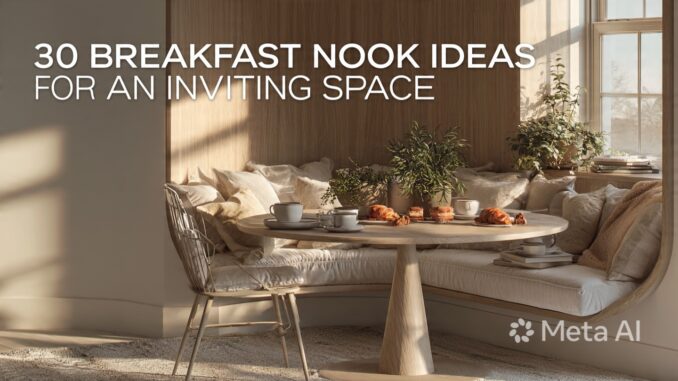
How to create a cozy, functional, and beautiful morning corner in any home

A breakfast nook is more than a place to drink coffee. It’s where slow Saturday mornings happen, where kids do homework after school, where you pay bills, read the news, and catch up with your partner before the day starts. The best ones feel intentional, warm, and lived-in — not like an afterthought squeezed between the fridge and the wall.

If you’re planning a remodel, staging a home, or just want to make your mornings feel 10% better, here are 30 breakfast nook ideas that work in real homes. Each idea includes layout tips, material suggestions, and ways to adapt it to small spaces, rentals, or larger family homes.


Why Breakfast Nooks Still Matter in 2026

Open-concept kitchens dominate new builds, but the dedicated breakfast nook has made a huge comeback. Here’s why:
- Defined function: In open plans, a nook creates a “room within a room” without walls. Psychologically, it signals “slow down, sit, eat” versus “stand at the island.”
- Space efficiency: A built-in banquette can seat 4-6 people in the footprint of a 4-top table with chairs. That’s gold in apartments and smaller homes.
- Resale value: Realtors consistently list “eat-in kitchen” or “breakfast area” as buyer keywords. A thoughtful nook photographs well and adds lifestyle appeal.
- Multipurpose use: Post-pandemic, we need homes that flex. Nooks are now WFH desks, crafting tables, and game-night HQ.
Before you start, measure your space. A comfortable nook needs at least 30 inches from table edge to wall for seating clearance, and 36-42 inches for walkways. Write that down. Now let’s get into the ideas.

Layout-Based Breakfast Nook Ideas
1. The Classic Corner Banquette
Best for: 90-degree corners, 6’x6’ minimum space
Why it works: Uses dead corner space and seats more people than a freestanding set.

Build an L-shaped bench with lift-up storage for small appliances or bulk pantry items. Pair with a 36-42" round pedestal table so no one straddles a table leg. Upholster the bench in performance fabric like Crypton or indoor/outdoor Sunbrella — spills wipe clean. Add a single statement pendant 30-36" above the table.

Budget tip: IKEA’s KALLAX turned on its side + a foam cushion = instant banquette base under $150.

2. Window Bay Nook

Best for: Homes with bay windows or bump-outs
Why it works: Natural light makes everything taste better.

Use the existing angles. A curved or faceted bench that follows the window line feels custom. If you can’t build in, use a curved settee. Hang cafe curtains on the bottom half of windows for privacy while keeping light. Add a small shelf below the sill for herbs like basil and mint — they love the light and you’ll actually use them.

Design rule: Keep seat height 17-19" so knees clear the table apron and you can see outside easily.

3. Single-Wall Bench Nook

Best for: Galley kitchens, narrow spaces
Why it works: You only lose 24" of floor depth vs. 36"+ for chairs on both sides.

Run a bench along one wall, then a narrow 24-30" wide table. Use backless benches or stools on the open side so the walkway stays clear. This layout shines in 8-10 ft wide kitchens. Bonus: the bench becomes a visual “baseboard” that makes the room feel longer.

4. Freestanding Bistro Nook

Best for: Renters, tiny apartments, commitment-phobes
Why it works: Zero construction, 100% movable.

Formula: 24-30" round cafe table + 2 upholstered chairs. That’s it. The trick is scale. In under 50 sq ft, a 36" table feels like a banquet hall. Keep it petite. Choose chairs with a small footprint — no wide armrests. A round rug 48-54" anchors the zone visually without crowding.

5. Island-End Nook

Best for: Large kitchens with big islands
Why it works: Extends the island without adding more cabinetry.

Drop the counter height at one end of the island to 29-30" table height for 4-5 feet. Add a built-in bench against the wall behind it. You get counter seating AND a real table. Great for families because kids can do homework while you cook, but they’re at a true table, not perched on a stool.


Style-Based Breakfast Nook Ideas

6. Modern Farmhouse Nook

Key elements: Shiplap or beadboard backing, spindle chairs, reclaimed wood table, black metal accents.
Make it yours: Avoid “Live Laugh Love” signs. Instead, use vintage cutting boards, a single enamel pitcher with wildflowers, or hand-thrown pottery. Texture > quotes.

Color palette: Warm white walls, oak table, charcoal bench cushion. It’s timeless, not themed.

7. Scandinavian Simplicity

Key elements: Pale wood, white, clean lines, zero clutter.
Make it yours: A light ash or birch pedestal table, molded chairs like the Eames or Article Svelti, and a single paper lantern pendant. Keep decor to one ceramic vase. The beauty is in negative space.

Functional tip: Scandi nooks hide storage. Use a bench with drawers for placemats and chargers.

8. English Cottage Nook

Key elements: Pattern mixing, skirted bench, plate rack, fresh flowers.
Make it yours: Upholster the bench in a small floral or stripe. Hang a plate rack above with mismatched antique plates. A drop-leaf table gives flexibility. This style embraces “collected,” so thrift is your friend.

Lighting: A fabric shade pendant or vintage schoolhouse light keeps it soft.

9. Mid-Century Modern Nook

Key elements: Tapered legs, walnut tones, geometric shapes, low backs.
Make it yours: Pair a Saarinen tulip table with wishbone chairs or a slim wood bench. Add a starburst clock or sunburst mirror nearby, not directly in the nook, to echo the era. Keep the palette to walnut, white, and one accent like olive or burnt orange.

10. Coastal Calm Nook

Key elements: Light blues, whites, natural textures, rattan.
Make it yours: Skip the “Beach” signs. Use a whitewashed oak table, rattan chairs, and blue striped cushions. A jute rug defines the space. Add a bowl of lemons or limes for color that you can actually eat.

Avoid: Obvious seashells and anchors. Think “vacation rental in Maine,” not “tourist shop.”

11. Industrial Loft Nook

Key elements: Metal, wood, brick, leather.
Make it yours: A metal base table with reclaimed wood top. Leather or faux-leather bench cushion. Edison bulb pendant, but use a warm 2700K bulb so it doesn’t feel like an interrogation room. If you have brick, let it show behind the bench.

Small space hack: A wall-mounted, fold-down table with factory-style stools.

12. Moody & Dramatic Nook

Key elements: Dark paint, rich woods, brass.
Make it yours: Paint the nook wall deep green, navy, or charcoal. It makes the space feel like a jewel box, especially in the morning. Use a marble or quartz table top to bounce light. Brass sconces instead of a pendant free up visual space.

Rule: If you go dark on walls, keep the bench and table lighter so it doesn’t feel like a cave.

13. Boho Eclectic Nook

Key elements: Layers, plants, global textiles, mix-and-match chairs.
Make it yours: Start with a simple wood table. Add a Turkish rug under it, mismatched chairs, and a bench with a kilim or mudcloth cushion. Hang a cane pendant and a macrame plant hanger. This style thrives on “more,” but keep 70% of the palette neutral so it doesn’t feel chaotic.

14. Minimalist Japandi Nook

Key elements: Japandi = Japanese + Scandi. Low, natural, calm.
Make it yours: Low wood bench, 28"H table, ceramic dishware, one branch in a vase. No clutter. Every item should be beautiful and useful. Oak and white, with black accents.

Space-Saving & Small Breakfast Nook Ideas

15. Fold-Down Wall Table

Best for: Studios under 500 sq ft
Install a wall-mounted drop-leaf table that folds flat when not in use. Pair with two folding chairs you can hang on pegs. When it’s up, you have a 30"x20" breakfast spot. When it’s down, you have a hallway.

16. Bay Window Bench-Only

No room for a table? Turn a deep window sill into a bench. Add a 6" cushion and two bolsters. Use a C-table or rolling cart as your “table.” You’ll face the window — prime coffee + people-watching setup.

17. Corner Floating Bench

Can’t do built-ins? Use two floating shelf brackets rated for 200+ lbs and a 2" thick wood slab. Mount at 18" height. It looks built-in but leaves floor space open, making the room feel bigger. Add floor cushions for extra seating when guests come.

18. Convertible Console-to-Dining Table

Products like the Transformer Table start as a 18" console and expand to seat 10. Keep it behind your sofa or in the nook as a console. Pull it out for Sunday brunch. Expensive, but cheaper than moving.

19. Banquette with Drawers, Not Lift-Tops

Lift-top benches are deep and you have to clear the table to access them. Drawers you can open while people are seated. Use them for kids’ art supplies so the nook becomes command central.

20. Backless Benches & Stools

Any seating that tucks fully under the table saves 12-18" of walkway. Critical in galleys. Choose benches with a slight saddle scoop so they’re comfortable without backs.

Material & Detail Ideas That Make a Nook Inviting

21. Upholstery That Can Take a Beating

The #1 reason people regret nooks: stains. Use performance fabric rated 50,000+ double rubs. Brands: Crypton, Revolution, InsideOut. If you love velvet, use it on the back rest only and vinyl or wipeable faux leather on the seat.

22. The Right Rug

A rug makes a nook feel like a “room.” But it has to work. Rule: Rug should extend 24-30" beyond the table on all sides so chairs stay on it when pulled out. Materials: Indoor/outdoor polypropylene or wool dhurrie. They clean easily. Avoid high-pile or jute if you have kids — crumbs live there forever.

23. Lighting at the Right Height

Pendant height formula: 30-36" above tabletop for 8-ft ceilings. Add 3" for each extra foot of ceiling height. Too high = cafeteria. Too low = you’ll hit your head. On a dimmer, always. Mornings need soft light.

24. Built-In Charging & Outlets

Add an outlet inside the bench or on the wall at bench height. We live on devices. A nook with hidden USB ports becomes the homework station by default. Use a UL-listed pop-up outlet in the table if you’re custom building.

25. Plate Rack or Picture Ledge

Mount a 6" deep plate rack or picture ledge 12-18" above the bench back. Style it with cutting boards, art, and a small plant. It adds height and personality without taking table space. And you can change it seasonally.

26. Mix Seating Types

The most inviting nooks don’t have 4 identical chairs. Try: bench + 2 chairs, or bench + 2 woven stools. It looks collected and lets different body types sit comfortably. Grandpa gets the chair with arms, kids take the bench.

27. Add a Soft Back Rest

Built-in benches feel hard. Solve it: 1) Add a 4" foam cushion, or 2) Install an upholstered back rest panel on the wall, or 3) Use big lumbar pillows. People will linger if it’s comfortable.

28. Use a Round Table in Tight Corners

Square tables + corner banquettes = everyone crawls over each other. A round pedestal table lets everyone slide in easily. 36" seats 3 comfortably, 42" seats 4, 48" seats 5. No corners to bump hips on.

29. Bring in Plants

One plant makes a nook feel alive. Best picks: Pothos on a high shelf, herb pots on the window, or a small fiddle leaf fig in the corner. If you have no light, use a high-quality faux olive branch in a ceramic pot. It’s about color and life, not botany tests.

30. Personal, Not Perfect

The most inviting spaces show life. A bowl of fruit you’ll actually eat. The kids’ art in a frame. A mug with a chip you love too much to toss. AdSense loves “expertise,” but readers love humanity. Leave 20% of your styling unstyled.

How to Plan Your Breakfast Nook: 5 Steps
|
Step |
What to Do |
Pro Tip |
|---|---|---|
|
1. Measure |
Tape out table + clearance on floor. Sit in a chair there for 10 min. |
If your knees hit, you’ll never use it. |
|
2. Choose Seating First |
Bench vs chairs determines everything else. |
Benches = more seats, less comfort. Chairs = more comfort, more space. |
|
3. Pick the Table |
Round for corners, rectangle for single-wall, pedestal to save legroom. |
24″ per person width is minimum. 30″ is comfortable. |
|
4. Light It |
One pendant or two sconces. Dimmer required. |
Warm 2700K-3000K bulbs only. Cool light ruins breakfast. |
|
5. Layer Textiles |
Cushion, pillows, rug. |
Washable slipcovers = peace of mind. |
Common Breakfast Nook Mistakes to Avoid
- Too big a table: If you can’t walk around it, you’ll eat at the counter instead.
- No storage: It becomes a dumping ground. Plan for where stuff lives.
- Bad lighting: A single recessed can in the ceiling makes you look like you’re in a hospital.
- Uncomfortable seats: If it’s not comfortable for 45 minutes, it’s a decoration, not a nook.
- Ignoring the view: Face the best thing in the room. Window > wall. If you face a wall, put art at eye level while seated.
Budget Breakdown: What Does a Nook Cost?
|
Tier |
Cost Range |
What You Get |
|---|---|---|
|
DIY Renter |
$200-$600 |
Freestanding table, 2 chairs, peel-and-stick cushion, plug-in pendant |
|
IKEA/Custom Mix |
$600-$1,800 |
KALLAX banquette hack, solid table, upholstered cushion, rug |
|
Semi-Custom |
$1,800-$4,500 |
Carpenter-built bench with storage, mid-range table/chairs, electrician for pendant |
|
Full Custom |
$4,500-$12,000+ |
Built-in cabinetry, stone table top, designer lighting, pro upholstery |
Don’t feel like you need full custom. The best nooks feel personal, not expensive.

Final Thought: Design for Your Real Mornings

A breakfast nook works when it fits your life. If you’re a coffee + newspaper person, prioritize light and a ledge for your mug. If you have three kids, prioritize wipeable surfaces and drawers for crayons. If you WFH, prioritize outlets and a chair that won’t kill your back.

Start with one change. Add a cushion. Swap in a round table. Hang a pendant. The goal isn’t a magazine photo. It’s a spot where someone says, “Let’s sit in the nook.”
Leave a Reply