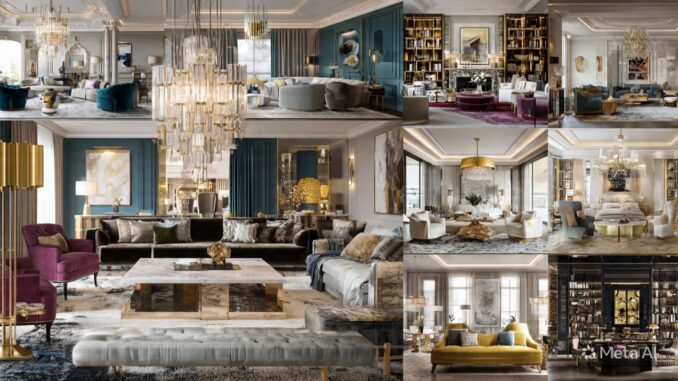
Luxury in a living room isn’t about price tags or showing off. True luxury is how a space feels when you walk in. It’s calm. It’s layered. It’s curated, not cluttered. The materials feel good to touch, the lighting flatters everyone, and every detail looks considered.

Elegant decor means restraint. It’s the difference between a room that looks expensive and a room that actually is timeless. Whether your budget is $2,000 or $200,000, these 20 ideas break down the principles luxury designers use to create spaces that feel elevated, not ostentatious.

What “Luxury” Really Means in 2026

Luxury today is quiet. It’s craftsmanship over logos, comfort over formality, and personal over perfect. Think mohair velvet instead of polyester, solid wood instead of veneer, and vintage art instead of mass-produced canvas prints. It’s not about trends — it’s about materials and proportion.

Let’s get into the ideas that read as elegant immediately.

Architectural & Structural Luxury

1. Custom Millwork and Wall Paneling
The look: Floor-to-ceiling wall molding, applied box trim, or wood slat walls behind the sofa.
Why it feels luxury: Architecture is the bones. Custom millwork adds depth and shadow that paint alone can’t achieve. It signals a home was built or renovated with intention.
Get the look: If you can’t do full paneling, try a picture frame molding box behind the sofa. Paint it the same color as the wall for subtle elegance. Use 1x3 MDF boards and a miter box — it’s a $200 DIY that looks custom.

2. Oversized Stone Fireplace Surround
The look: Marble, travertine, or limestone slab running floor to ceiling. No mantel clutter.
Why it feels luxury: Natural stone with strong veining is art. One slab has more impact than a busy tile pattern.
Get the look: Real marble is pricey. Try large-format porcelain slabs that mimic Calacatta or Statuario. Keep the surround minimal — let the stone be the moment.

3. Dramatic Ceiling Details
The look: Coffered ceiling, plaster medallion, or subtle tray ceiling with cove lighting.
Why it feels luxury: The ceiling is the “fifth wall.” Most people ignore it. Luxury rooms finish it.
Get the look: If you rent, use a large flush mount with a plaster-style shade or add picture molding to the ceiling perimeter for a faux coffered effect.

4. Wide Plank Hardwood or Herringbone Floors
The look: 7”+ wide European oak, herringbone, or chevron pattern in a natural matte finish.
Why it feels luxury: Wide planks and patterned layouts signal custom vs builder-basic. Matte finishes look more expensive than glossy.
Get the look: If you can’t refinish, add a large vintage or Persian rug. It adds the same sense of history and craftsmanship.

Material & Texture Luxury

5. Mohair, Velvet, and Bouclé Upholstery
The look: Sofa in mohair velvet, accent chairs in ivory bouclé or silk velvet.
Why it feels luxury: These fabrics have depth, sheen, and texture that catch light. Polyester “velvet” doesn’t compare.
Get the look: Start with pillows. A mohair pillow on a linen sofa elevates the whole piece. For durability, look for performance velvet or real cotton velvet.

6. Solid Marble or Onyx Coffee Table
The look: One thick, heavy stone slab as the coffee table. No glass top, no skinny legs.
Why it feels luxury: Weight = quality. Solid stone is sculptural and timeless.
Get the look: Source a remnant from a stone yard and add block legs. Or try travertine — it’s warmer and more forgiving than white marble.

7. Antique or Vintage Rug as Foundation
The look: 100-year-old Persian, Oushak, or Turkish rug under modern furniture.
Why it feels luxury: It adds soul, history, and imperfection. New rugs can’t replicate the patina.
Get the look: Vintage rugs are often cheaper than new high-end ones. Look for wear in low-traffic patterns — it adds character.

8. Aged Brass and Unlacquered Finishes
The look: Sconces, coffee table legs, and cabinet hardware in unlacquered brass that patinas over time.
Why it feels luxury: It’s alive. It gets better with age vs looking outdated. Lacquered shiny brass looks 1990s.
Get the look: Buy unlacquered brass and let it age, or use a dark wax on new brass to take the shine off.

9. Full-Grain Leather Accents
The look: Camel or chocolate leather lounge chair, leather-wrapped cabinet pulls, or leather piping on pillows.
Why it feels luxury: Real leather has grain, smell, and develops a patina. Faux leather cracks and peels.
Get the look: One vintage leather chair from a thrift store can anchor a room. Condition it and it’ll last decades.

Lighting That Reads Elegant

10. Layered Lighting on Dimmers
The look: No overhead “boob lights.” Instead: chandelier + sconces + table lamps + floor lamp + picture light. All on dimmers.
Why it feels luxury: Luxury is about control. You can set the mood for 3pm sun vs 9pm cocktail hour.
Get the look: Minimum 5 light sources in a living room. Start with one great floor lamp and put all lamps on smart dimmer plugs.

11. Alabaster or Plaster Lighting Fixtures
The look: Table lamps with real alabaster bases, plaster sconces, or a gypsum chandelier.
Why it feels luxury: Alabaster glows when lit. It’s natural, organic, and each piece is unique.
Get the look: Real alabaster is expensive, but plaster reproductions give the same matte, chalky look for less.

12. Picture Lights Over Art
The look: Brass picture light mounted above large-scale art.
Why it feels luxury: It’s what galleries and museums do. It says “this art matters.”
Get the look: Battery-powered LED picture lights now exist for renters. No hardwiring needed.

Furniture & Layout Luxury

13. Curved Sofa as the Focal Point
The look: A sweeping curved sofa in neutral mohair or velvet, not pushed against a wall.
Why it feels luxury: Curves are custom and softer than the standard straight sofa. They force elegant flow.
Get the look: If a new sofa isn’t in budget, add a curved boucle accent chair or rounded ottoman to break boxy lines.

14. Matching Pair of Accent Chairs
The look: Two identical chairs — vintage French, modern barrel, or sleek lounge — flanking the coffee table or fireplace.
Why it feels luxury: Symmetry is classic and calming. Pairs signal intentional design.
Get the look: They don’t have to be expensive. Two matching thrifted chairs reupholstered in one fabric look high-end.

15. Oversized Art, Minimal Frames
The look: One huge piece of art, 48”+ wide, in a simple float frame or no frame.
Why it feels luxury: Scale = impact. Small gallery walls can look busy. One large work feels collected.
Get the look: Large-scale art is pricey. Try a high-res photo of a texture printed on canvas, or frame a vintage textile.

16. Low, Long Media Console in Solid Wood
The look: 90”+ long, low console in walnut, oak, or cerused finish. Closed storage, no clutter.
Why it feels luxury: Horizontal lines make the room feel wider and calmer. Solid wood beats MDF.
Get the look: IKEA Besta hacked with wood fronts and a solid wood top can fake the look.

Styling & Detail Luxury

17. Edited Coffee Table: 3-Item Rule
The look: Stack of 2–3 large art books, one sculptural object, one fresh floral or branch. That’s it.
Why it feels luxury: Negative space is the ultimate luxury. It means you don’t need to fill every inch.
Get the look: Use books you actually read. Oversized art books from museum shops look great and cost $40–60.

18. Custom or High-End Drapery
The look: Linen or silk drapes, hung 6” above the window and kissing the floor. Double width for fullness.
Why it feels luxury: Cheap curtains are obvious — they’re skimpy and short. Proper drapes frame the room like a suit.
Get the look: Order 100” long curtains and hem if needed. Use 2 panels per side for fullness. Hang on rings, not grommets.

19. Fresh Flowers or Branches Only
The look: Tall quince branches in a ceramic vessel, or a loose arrangement of garden roses. No fake plants.
Why it feels luxury: Real florals signal care and impermanence. Luxury is fresh, not forever.
Get the look: Buy one grocery store bouquet weekly and split it into 3 small bud vases around the room.

20. Collected, Not Decorated
The look: Vintage wood bowl, stone object from travels, handmade ceramic lamp. Nothing from a big-box “5-piece decor set.”
Why it feels luxury: Collected pieces have stories. They’re not matchy-matchy.
Get the look: Shop Etsy, estate sales, and your own travels. One piece per month beats a cart full of HomeGoods.

The Principles Behind Every Luxury Room

You can copy ideas, but understanding why they work helps you adapt them.
-
Proportion Over Price: A $400 sofa in the right scale looks better than a $4,000 sofa that’s too big.
-
Negative Space Is Rich: Luxury rooms aren’t full. They’re edited. Leave breathing room.
-
Touch Matters: Luxury is tactile. If it looks good but feels cheap, it’s not luxury.
-
Lighting Is Makeup: Bad lighting makes a $10k room look like $1k. Good lighting does the reverse.
-
Patina Over Perfection: Wood with grain, stone with veining, leather that ages. Flawless = flat.
Luxury Mistakes to Avoid
-
Sets of everything: Matching sofa + loveseat + chair reads as showroom, not home.
-
Too much shine: A little brass is elegant. All chrome + crystal = dated.
-
Signage art: “Live Laugh Love” signs kill elegance instantly.
-
TV as focal point: If possible, make the fireplace, art, or view the focus. Use a Frame TV if you must.
-
Ignoring scale: Tiny rug, tiny art, tiny lamp = room looks cheap no matter what you spent.
Elegant decor isn’t about having more. It’s about choosing better and editing harder. A luxury living room should feel effortless, even if it took effort to create. It should invite you to sit down, stay awhile, and exhale.

Pick 2–3 ideas from this list and implement them well. Luxury is cumulative. One solid stone table + proper lighting + edited surfaces will do more than a room full of “luxury-style” knickknacks.

Your home should feel like the best version of you — calm, confident, and quietly beautiful.
Leave a Reply